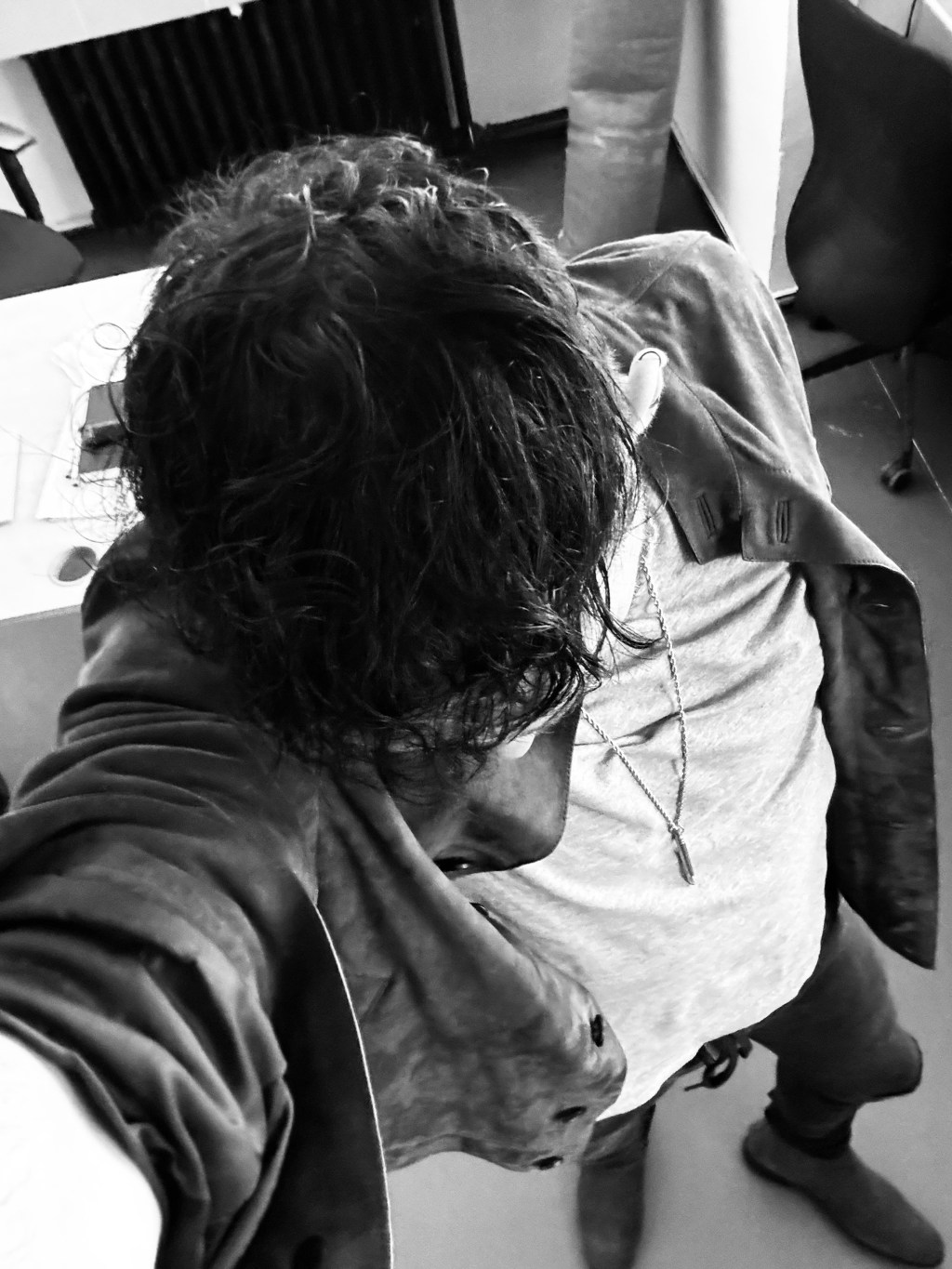
There was a time when I trained for aesthetics—the flex, the mirror, the numbers. Back then, strength was about how you looked under gym lighting, not how you held yourself when life got heavy. But everything changed, especially when MS stepped into the ring. Suddenly, training wasn’t about beach season or bicep veins—it became survival. A personal war. A daily test of control over a body that doesn’t always listen. And that’s when I stopped training like an athlete…and started training like a fighter. Not a fighter for fame or medals—a fighter for presence, clarity, and capability. Because when your nervous system glitches and your limbs betray you mid-set, you stop giving a damn about personal records. You start caring about resilience. About balance, function, reaction time, composure under pressure. I train now to stay sharp. I train to stay capable. I train because life doesn’t give warning—and if you’re not ready, you’re already behind. Lifting gives me the structure. Boxing gives me the edge. MS gave me the perspective. So I punch, I press, I grind—not for trophies or social media. But because I refuse to lose my grip—mentally, physically, or emotionally. This isn’t about looking powerful. It’s about being reliable under fire. Not for applause. Not for ego. But for the real-world moments that actually count—holding your child, bracing through a flare-up, facing life head-on without flinching. Because the truth is…when life tries to knock you off center, it’s not the loud ones who last. It’s the calm, prepared, and unshakable ones who win the fight you don’t see coming.
Training Like It’s a Weapon, Not a Hobby.
There’s a massive gap between working out and training with intention—and most people never cross it. They go through the motions. A few sets, a few selfies, maybe some soreness the next day and a protein shake they think fixes everything. But for me—and anyone who’s ever had their body betray them—that mindset doesn’t cut it. When you live with MS, you learn fast that this isn’t about looking strong, it’s about staying capable. I don’t train to check a box or post stats. I train because I need to trust my body when it matters most—in the chaos, in the fatigue, in the fog that hits like a truck at 2 PM. Lifting weights, throwing punches, moving under tension—it’s not therapy. It’s preparation. You stop seeing the gym as a playground, and you start treating it like a battlefield. You’re not pumping up your biceps—you’re reinforcing your frame. You’re not doing cardio—you’re building endurance for when the fatigue doesn’t give you a warning. MS taught me the cost of being passive. Skip the warm-up, rush the reps, ignore the signs—and you’ll pay for it later with instability, burnout, and flare you could’ve dodged. That’s why every movement counts now. Every push, every pull, every second of stillness under load—it’s calculated. It’s deliberate. I treat my training like it matters—because it does. I’m not just training to get through the session. I’m training to get through life. It’s how I keep my core solid when my balance tries to wobble. It’s how I hold my own when brain fog creeps in mid-day. It’s how I walk tall—not out of pride, but because I’ve built the foundation to stand tall. Some days, I move like a machine. Focused. Ruthless. All engine. Other days, it’s slower—more calculated, more about form and breath. And both versions are valid. Because what I’m building isn’t just muscle. It’s resilience. It’s adaptability. It’s ownership of the one things MS is always trying to take—my edge. This isn’t a hobby. It’s not recreational. It’s my way of staying sharp, staying steady, and staying in the fight—even when no one’s watching. So no, I’m not training for beach season. I’m training to carry my daughter when my legs feel like lead. To walk into hard days with steel in my spine. To know, in the back of my mind, that if this disease wants to throw a punch—I’ll be ready to hit back. And I’ll do it without flinching.
Boxing’s Return. Why I Still Hit the Bag.
Before I ever cared about squats or macros, I was slipping punches. Boxing wasn’t a sport for me—it was survival training dressed as discipline. It taught me how to stay calm with fists flying. It taught me how to breathe when every instinct said panic. It taught me how to keep moving forward, even when I didn’t want to. And now—after MS, after all the physical curveballs and invisible battles—I’ve come back to the ring. Not to fight anyone else…but to fight for my focus. My rhythm. My edge. You see, boxing isn’t about violence. It’s about precision. It’s about controlling chaos with calmness—and that’s exactly what life with MS demands. The bag doesn’t care how tired you are. It doesn’t care if you had a rough night, or if your balance is off, or your legs feel like bricks. The moment you square up, it asks you a simple question Are you present? Because if you’re not—if your mind drifts for even a second—your feet stumble. Your timing cracks. Your jab loses purpose. And just like that, you’re reminded that you don’t beat MS by overpowering it. You beat it by showing up focused—day after day—ready to adapt. Boxing forces that out of you. IT teaches tension and relaxation at once. Explosiveness without recklessness. Effort without ego. And the carryover is massive. Boxing makes me more stable on my feet—not just in the gym, but when fatigue ambushes me in the middle of my kitchen. It keep my hands sharp—not for fighting others, but for fighting clumsiness, coordination lapses, and fog. It trains my breath—not just for recovery, but for calming my nervous system when stress and MS start ganging up on me. Plus, there’s a kind of medicine in the repetition. The constant footwork. The sound of gloves hitting leather. That rhythm becomes its own kind of therapy—primal, pure, untouchable by flare-ups. It reminds me I’m still in control of something. That even when everything feels unpredictable—I can still put hands on the bag and choose to fight. This isn’t about nostalgia. It’s not about reliving my younger self. It’s about staying connected to the part of me that refuses to fold. The part that still moves forward. Still pivots. Still throws with intent. When I box now, it’s not to compete—it’s to reclaim. Reclaim my coordination. Reclaim my aggression. Reclaim my identity as someone who never backed down—even when his body started turning against him. And let’s not sugarcoat it—there are days when the bag wins. When my jabs are slow. When my legs lag. When my whole system just isn’t firing. But I still show up. I still swing. Because the bag isn’t the enemy. The bag is the mirror. And what it reflects—that fighter, that raw presence, that refusal to quit—is exactly why I keep coming back. Every. Damn. Time.
Strength You Can Use from the Gym to Real Life.
There’s a difference between being strong and being useful. I’m not impressed by a six-pack that can’t take a hit. I don’t care about massive biceps if they cramp during daily life. What I care about is translatable power—strength that shows up when shit hits the fan. When you live with MS, that line becomes crystal clear. It’s not about how you look in a pump. It’s about whether you can walk across a room without stumbling. Whether you can carry your kid, hold a bag of groceries, hold a plank of wood steady while building something for your home—even if your nervous system isn’t cooperating. That’s the litmus test for everything I do in the gym…can I use this outside? Does this movement—this lift, this drill, this session—make me harder to knock over, harder to break, harder to demoralize? Strength, to me, is a form of insurance. It’s how I prepare for the days that will come—the unpredictable ones, the shaky ones, the ones where MS tries to swing first. Because I’ve had those days. I’ve felt the rubber legs. I’ve fought through brain fog so dense I forgot where I put my car keys or what day it was. And I’ve still had to lead. To provide. To show up—not just for me, but for everyone counting on me. So no, I don’t train like a bodybuilder. I train like a man who refuses to be fragile. Everything I do has a reason. I build my posterior chain because it keeps me upright when the tremors kick in. I train core stability not for abs, but for balance—because when my legs start lying to me, my core keeps me from face-planting. I box because it sharpens my reactions, my footwork, my mind—and that mental acuity carries into every hour of my day. You can’t fake this kind of resilience. You have to earn it. One deliberate session at a time. The irony? I’ve gotten stronger, fitter, and more in tune with my body since my diagnosis than I ever was before. Why? Because now I train with purpose. I don’t waste energy chasing someone else’s aesthetic goals. I train to keep my body functional, my nervous system sharp, and my mind grounded. Because when you’re forced to question whether your body will hold up on any given day—you stop training for the mirror and start training for the mission. And here’s the deeper truth. Strength gives me freedom. It lets me say yes to life. Yes to helping someone move. Yes to have a walk with my daughter on my back. Yes to days that don’t go according to plan, because I know my body can take it. That’s what real strength is. Capability. Reliability. Resilience that doesn’t just live in the gym but bleeds into everything I do. So no, I’m not training for trophies. I’m not measuring progress in inches or numbers. I’m measuring it in moments:
- The moment I didn’t trip when MS tried to trip me.
- The moment I lifted my daughter when my legs said no.
- The moment I walked through a brutal flare and still handled my responsibilities like a man.
That’s real strength. That’s the kind you never regret building.
Training is a Responsibility. Not Just for Me, but for My People.
There comes a point in every man’s life where training stops being a hobby—and becomes a code. I’m not some lone wolf grinding in the gym because it’s trendy. I’m in there because I owe it to the people I love to stay sharp, strong, and hard to kill. My family isn’t just counting on me to be present. They’re counting on me to be solid—physically, mentally, emotionally. And that doesn’t happen by accident. It happens by choice—repeated, disciplined, daily choice. I train not to impress, but to reinforce who I am and what I stand for. Because when life hits—and it will—I want my family to know that I’m built to handle the weight. When MS throws a flare, fatigue, or pain out of nowhere…I don’t get to tap out. I don’t get to fall apart and say Sorry, I’m not feeling it today. I still need to be a father, a partner, a man of my word. Training gives me the armor to show up when the world would understand if I sat down. And here’s something that might sting—but it’s real. You’re being watched. Not in a paranoid, social-media kind of way. In the way that matters. Your kids? They’re watching how you handle stress. Your partner? Watching how you handle setbacks. Your team, your friends, your community—even if they never say it—they notice when you keep showing up without excuses. Every time you train through discomfort, every time you show discipline when it’s easier to fold—you teach everyone around you what leadership actually looks like. I want my daughter to see a father who doesn’t quit when life gets unfair. I want my partner to feel safe knowing I won’t crumble under pressure. And I want the people who read this blog—men, women, anyone fighting MS—to realize that strength isn’t selfish. It’s service. It’s how we hold the line for the people we love. It’s how we build trust—not just in others, but in ourselves. It’s how we create a foundation that others can stand on when they need support. When you stop training just for yourself, your entire mindset changes. Suddenly, skipping a session doesn’t just mean you missed a lift—it means you neglected your mission. And once that clicks, discipline gets a whole lot easier. Because now, every rep becomes a promise:
- I will not let this beat me.
- I will not let my family carry my weight for me.
- I will not become a burden when I can he a shield.
Some days, training is therapy. Some days, it’s war. But every day, it’s a commitment to being ready—for whatever life, MS, or the world throws at you. It’s not about ego. It’s not about six-pack abs. It’s about being the kind of man who can carry weight—his own, and the weight of others when they’re tired. That’s why I train. And that’s why I’ll never stop.
Strength Is the Standard. Not the Exception.
Let’s get one thing straight. You don’t train just to look good. You train to be ready. Ready to hold your ground when everything else feels like it’s falling apart. Ready to carry your own weight—and sometimes the weight of others. Ready to stand tall, even when your legs shake. This journey with MS will test you in ways no workout ever could. It’ll hit your nervous system, your identity, your patience—and it won’t ask permission. But that’s exactly why we train. Because real strength isn’t loud. It’s quiet. It’s the decision to keep showing up when your energy’s gone and the world would understand if you didn’t. It’s pushing through when no one’s clapping. It’s grinding through the mundane, through the fatigue, through the doubt—not for applause, but because that’s who you’ve chosen to be. You train because you lead. Because people count on you—even if they never say it out loud. And because deep down, you refuse to let this disease write your story. No one else is going to save you. No miracle cure. No motivation fairy. You become your own rescue. You build a body that can carry pain—and still carry purpose. You build a mind that knows how to fight—and when to rest. You build a life that’s not defined by diagnosis—but by how you respond to it. So keep going. Not for ego. Not for likes. But for the life you refuse to hand over without a fight. Strength isn’t something you earn once. It’s something you uphold every damn day. Now go prove it.

 MS Fighter
Leave a comment