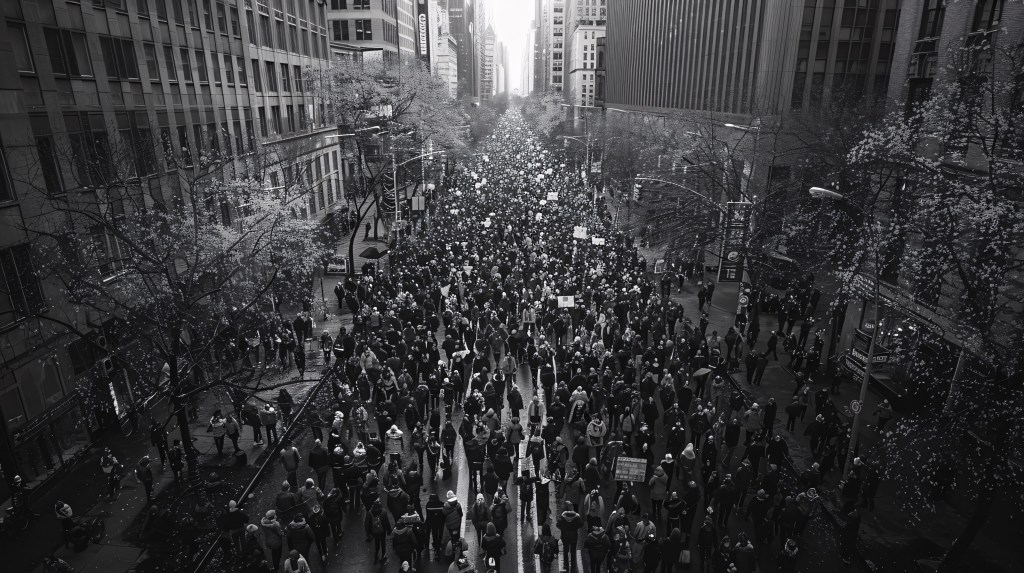
Shanghai does not ask if my nervous system is ready. It moves anyway. That is the first thing you learn here. The city has its own pulse. Fast. Heavy. Relentless. Streets full of bodies, cars, scooters, lights, screens, signs, movement, sound, humidity, pressure, glass towers, narrow passages, massive malls, metro lines, elevators, apps, gates, QR codes, payment systems, and constant motion. Shanghai does not slow down because you are tired. It does not lower the volume because your brain is fogged. It does not reduce the heat because MS makes temperature more expensive. It does not create an empty street because crowds drain your attention. It does not care that your body has a hidden condition running in the background like bad software. The city moves. You adapt or you get eaten in pieces. That sounds harsh.
Good.
It is accurate. A megacity does not negotiate with your comfort. It does not ask whether you had enough sleep, whether your legs feel heavy, whether the humidity is pressing on your body, whether your daughter is tired, whether your wife needs something, whether work is waiting, whether you have already spent too much energy before noon. The city does not care. And that is not evil. It is just honest. Back in Bratislava, the scale was different. Familiar streets. Familiar rhythm. Familiar shortcuts. Even when I was tired, the city did not demand the same level of processing. I knew how to move there. I knew what to expect. I knew how far things were. I knew what the day would cost. Shanghai changed the math. Here, the city is not just a background. It is a variable. A serious one. For someone without MS, Shanghai can be overwhelming, exciting, exhausting, beautiful, chaotic, efficient, massive, impressive. All of that at once. For someone with MS, Shanghai is also a full-body test. Heat tests you. Humidity tests you. Crowds test you. Noise tests you. Long distances test you. Translation tests you. Transport tests you. Constant decisions test you. Family logistics test you. Work pressure tests you. The city becomes an exam you did not schedule but still have to pass. And the hardest part is that most of these tests are invisible. Nobody looks at you walking through a crowd and sees the calculation. How far to the exit? How much walking is left? Is there shade? Is the metro too crowded? Can my daughter handle this route? Will this heat cost me later? Do I need water now or should I have already had it twenty minutes ago? Is this fatigue normal, or is my system getting overloaded? Do I push through, or do I protect tomorrow?
That is the hidden layer.
That is MS in a city like Shanghai. It is not always dramatic. It is not always a symptom flare in the obvious sense. Sometimes it is just the day becoming more expensive than it looks. The outside world sees a man walking through a city. Inside, the system is calculating load. That is the part people do not understand about MS. They want clear signs. They want visible proof. A limp, a cane, a hospital story, a dramatic moment. Something that makes the disease easy to recognize. But MS often works like a thief. It steals in smaller amounts. A little energy here. A little balance there. A little patience. A little clarity. A little recovery. A little tolerance for heat. A little sharpness in the brain. A little physical confidence. And if you are not paying attention, the day becomes a robbery. Shanghai makes that more obvious. Because the city gives you so many inputs that your system has to process everything at once. The street is not quiet. The metro is not empty. The signs are not always immediately readable. The food options require decisions. The apps require attention. The transport requires planning. The distances are not always what they look like on a map. The heat does not ask whether you are already tired. And if you have a family with you, the calculation becomes even more serious. I am not just moving myself through Shanghai. I am moving as a husband and father. My daughter needs rhythm. My wife needs support. The home still needs to function. Work still needs to be done. Life does not pause because the city is loud and the nervous system is under pressure. That is why this post matters. Because moving to Shanghai with MS is not just about courage. Courage is too simple a word for this. It is not just about being strong or never giving up. Those phrases are fine, but they are too clean. Too small. This is about operating under load. It is about learning how to stay functional in an environment that constantly pulls energy from you. It is about refusing to shrink while also refusing to be stupid. That balance matters. A lot of people confuse toughness with ignoring the environment. They think strong means pretending nothing affects them. Heat? Ignore it. Fatigue? Push through. Crowds? Deal with it. Brain fog? Stop being weak. Recovery? Later. That is not toughness. That is poor management. And poor management is dangerous when you live with MS. Real toughness is more precise. Real toughness looks at the city honestly and says This will cost energy. Then it builds a system. Because I do not need Shanghai to be easy. I need to be effective inside it. That is the difference. I am not here to complain that the city is too hot, too crowded, too loud, too large, or too different. That would be useless. Shanghai is Shanghai. It does not owe me softness. But I also will not pretend that these conditions are neutral. They are not. They affect the MS body. They affect energy. They affect cognition. They affect patience. They affect recovery. They affect how you plan a day, how you move, how you work, how you train, how you parent, and how you protect the system from collapse. So the goal is not to dominate Shanghai like some arrogant idiot. The goal is to read the terrain. Heat. Humidity. Crowds. Noise. Distance. Family needs. Work demands. MS load. Then move accordingly. That is not surrender. That is command. The city does not care if my nervous system is tired. Fine. I do not need it to care. I need to build a system that does.
Heat Is Not Just Weather When You Have MS.
For most people, heat is uncomfortable. For someone with MS, heat can become a tax on every step. That is the difference. People hear heat and think about sweat, discomfort, maybe feeling tired, maybe wanting air conditioning. Normal things. Annoying things. Manageable things. But with MS, heat can feel like someone turned down the power output inside the body. The legs can feel heavier. The head can feel slower. Energy can leak faster. Patience can become thinner. Brain fog can step closer. Symptoms can feel louder. Even simple movement can start costing more than it should. That is why heat is not just weather. It is a variable. And in Shanghai, that variable matters. Humidity changes the game even more. Dry heat and humid heat are not the same animal. Humidity sits on you. It does not just warm the air; it makes the air feel heavier, thicker, less forgiving. It makes the body work harder to cool itself. It turns walking into negotiation. It makes the shirt stick, the breathing feel less clean, the skin feel trapped, the whole system slightly more irritated. For someone without MS, that is unpleasant. For someone with MS, it can become a serious drain. And the dangerous part is that the drain can be slow. It does not always announce itself immediately. You start the day fine. You step outside. You walk. You solve something. You carry a bag. You help your daughter. You get on transport. You move through a crowd. You stand in the wrong place too long. You underestimate the distance. You tell yourself it is okay. Then, after a while, something changes. The body becomes heavier. The mind becomes less sharp. You start needing more effort for the same task. The day gets more expensive. That is the heat tax. It is not dramatic enough for people to notice from the outside, but it is real enough to change your entire day. This is where ego becomes dangerous. Because ego says do not adjust. Ego says push through. Ego says if you admit the heat affects you, you are weak. Ego is an idiot. The body does not care about your pride.
Especially with MS.
If heat is a trigger, pretending it is not a trigger does not make you stronger. It makes you badly informed. And badly informed men make stupid decisions. I am not interested in stupid decisions dressed up as toughness. I am interested in command. Command means I respect the heat without fearing it. There is no fear here. Fear is not the point. My motto stays what it is…the only thing that scares me is that I am not afraid of anything. That means I do not need fear to make me careful. I need intelligence. And intelligence says…heat changes the cost of the day. So plan for it. This is where life with MS becomes tactical. You cannot treat the city like a normal playground if the weather is pressing on your nervous system. You have to know when to move, when to pause, when to hydrate, when to get indoors, when to use transport, when to avoid unnecessary walking, when to shift a plan, when to save energy for the things that matter. Some people hear that and think it sounds limiting. I see it differently. Planning is what keeps life bigger. If I ignore heat and crash, my world gets smaller. If I manage heat intelligently, my world stays open. That is the truth most people miss. Adaptation does not always reduce freedom. Sometimes adaptation protects freedom. If I hydrate before I feel thirsty, I protect the day. If I avoid walking too long in peak heat, I protect work, training, and family energy. If I plan routes better, I protect the nervous system. If I use indoor breaks, shade, air conditioning, and timing intelligently, I protect my ability to keep moving. That is not weakness. That is how a man stays in the game. There is also a psychological layer to heat. Heat makes irritation easier. That matters. When the body is hot, tired, and under load, the mind becomes less generous. Small problems feel bigger. Waiting feels longer. Noise feels sharper. A child’s normal needs can feel heavier. A logistical mistake can feel personal. A delayed message can become more annoying than it deserves to be. That is not because you are a bad person. It is because the system is under pressure. But being under pressure does not give you permission to poison the room. This is where discipline has to go beyond the gym. Anyone can act strong while hitting a heavy bag. Can you stay controlled when the heat is draining you, the city is loud, your daughter needs patience, your wife needs support, work is waiting, and your body is sending warning signals? That is real training. The kind nobody records. The kind that actually matters. Because heat does not only test your body. It tests your character. It tests whether you can tell the difference between discomfort and danger. It tests whether you can adjust without feeling humiliated. It tests whether you can stay useful when your system is not at full power. It tests whether you can lead your family without making them pay for the pressure inside you. That is one of the hardest parts. Not the sweating. Not the walking. The emotional control under physical load. A man with MS in a hot, humid megacity must learn that his state affects the people around him. If I mismanage my energy, I do not suffer alone. My wife feels it. My daughter feels it. The home feels it. Work feels it. Training feels it.
That makes heat management a responsibility.
Not a preference. Not a comfort habit. Responsibility. The city can be hot. Fine. I can be smarter. That is the rule. And it applies everywhere. If we go out, I think about timing. If we walk, I think about distance. If we plan a family day, I think about recovery. If I train, I think about what the heat has already taken from the body. If I work, I think about when my brain is sharpest and when the day has already burned too much fuel. I do not always get it perfect. No one does. But the standard is clear…do not let heat make decisions for you. Read it early. Respect it. Build around it. Because heat is not just weather when you have MS. It is pressure. And pressure reveals whether your system is real.
Crowds. Noise. The Brain Fog Tax.
A megacity does not only move your body. It attacks your attention. That is one of the most underestimated parts of living in Shanghai with MS. People talk about walking, heat, fatigue, and transport. All important. But the cognitive load might be just as serious. Maybe even more dangerous because it is harder to see and easier to dismiss. Crowds are not just crowds. Noise is not just noise. Signs are not just signs. Apps are not just apps. Translation is not just translation. Every input wants processing. Every movement around you demands awareness. Every unfamiliar sign asks for interpretation. Every app notification wants a decision. Every street crossing requires attention. Every metro transfer asks you to understand direction, flow, people, timing, exits, and distance. For a healthy brain, that is tiring. For an MS brain, especially when fatigue or brain fog is already nearby, that can become a tax. The brain fog tax. It is not always obvious at first. You can still function. You can still move. You can still answer questions. You can still solve problems. But everything starts taking more effort. The mind feels like it is pushing through thicker air. The sharpness is still there, but it needs more force to cut. That is dangerous because it can make you angry at yourself. Why is this simple thing annoying me? Why am I slower today? Why does this screen feel like too much? Why does this crowd feel heavier than it should? Why do I want silence so badly? Because the system is loaded. That is why. And again, this is not weakness. It is data. Shanghai gives the brain a lot to process. Crowded metro stations. Elevators. Shopping centers. Streets full of movement. Restaurants. Delivery systems. Translation apps. Payment apps. Work messages. Family needs. Navigation. Signs. Sounds. People moving close to you. Scooters appearing where you do not expect them. Noise layers stacking on top of each other. The city is not one input. It is fifty inputs at once. And MS does not always appreciate that. This is where the old life in Bratislava had hidden advantages. I did not need to think about everything. Much of daily life ran on memory. Memory saves energy. Familiarity reduces processing. Known routes reduce cognitive load. Familiar shops reduce decisions. A known language reduces friction. Shanghai removes that buffer. At least in the beginning. Everything asks for attention. And attention is not free. This becomes even more obvious when you are with family. If I am alone, I can handle the overload in a more direct way. Move faster. Stop when needed. Ignore what I can. Take a different route. Adjust without explaining. With family, the system is more complex. My daughter needs safety, patience, and rhythm. My wife needs support, decisions, coordination, partnership. A family outing is not just walking from point A to point B. It is snacks, rest, timing, mood, heat, distance, bathrooms, transport, directions, and whether everyone still has enough energy to make the day good instead of just survivable.
Now add MS.
Now add heat. Now add language barriers. Now add crowds. Now add work still sitting in the background. That is not just a day out. That is logistics under sensory pressure. And if you do not manage it, the brain fog tax gets paid with interest. You start losing patience. You start making worse decisions. You start reacting instead of leading. You start treating normal problems like attacks. That is the moment you need to step back and recognize the pattern. The city did not suddenly become your enemy. Your system is overloaded. Do not make a philosophy out of a low battery. That sentence matters. A lot of people do this. They get tired, overstimulated, hungry, hot, and cognitively drained, then suddenly everything becomes a deep emotional issue. The city is too much. Life is too hard. The move was too big. The body is failing. Nothing works. Maybe. Or maybe you need water, food, silence, sleep, and fewer inputs for two hours. Not every bad feeling is a life conclusion. Sometimes it is a system warning. With MS, learning that distinction is critical. Brain fog is especially cruel because it can attack identity. I value sharpness. I value thinking clearly. I value directness, speed, precision, execution. When the mind gets slower, it does not just feel inconvenient. It feels personal. That is the danger. You start thinking the fog is you. It is not. It is weather in the system. Bad weather can affect the mission, but it is not the commander. So the response has to be tactical. Reduce inputs. Create quiet. Choose simpler routes. Use structure. Do not overload the evening after a heavy city day. Do not stack too many unfamiliar tasks in one block if the body is already running hot. Do not pretend a crowded, humid, noisy day costs nothing.
It costs. Pay attention to the price early, or the price gets bigger. This is also where writing becomes useful. When the city gives too much input, writing gives structure back. The page does not move. The page does not shout. The page does not crowd you. The page waits. That matters. Writing turns chaos into sequence. It takes the storm of impressions, frustrations, lessons, and physical sensations and forces them into order. That is why coming back to the blog after a break matters for me. I was not away because the story ended. I was away because I was inside the story, collecting material the hard way. Now the material has weight. Shanghai is not an idea anymore. It is a pressure I can describe. Heat has a texture. Crowds have a cost. Noise has consequences. Brain fog has a pattern. Adaptation has rules. That is what I want this post to show. Living with MS in a megacity is not only about whether you can walk far enough. It is about whether you can process the city without letting it burn your system out. It is about attention management. It is about knowing when the brain needs fewer inputs before the body forces a shutdown. It is about protecting clarity like a resource.
Because clarity is a weapon.
Without clarity, every problem looks bigger. Every decision feels heavier. Every symptom feels more dramatic. Every family need feels more stressful. Every work task feels more distant. With clarity, you can separate signal from noise. That is the whole game. Shanghai creates a lot of noise. MS makes noise more expensive. So I need systems that keep the signal alive. That means I cannot just ask Can I handle this? I need better questions. How much input has the day already taken? How much heat has the body absorbed? How many decisions are still ahead? Do I need silence before work? Does my daughter need rest before the next task? Does my wife need support before another errand? Is this route efficient or just stupid? Is this plan ambitious or badly designed? Those questions protect the day. They also protect the man. Because there is no glory in letting a city fry your attention and then pretending the damage is character-building. Some damage teaches. Some damage is just bad planning. I want the first. I avoid the second. Crowds, noise, and brain fog are not excuses. They are conditions. And conditions are handled. That is how you stay operational in a city that never stops moving.
My Shanghai Survival Rules.
Adaptation is not surrender. It is how you stay in the game. That sentence should be understood before anything else. Because every man with pride eventually has to face the same trap…he thinks adjusting means losing. He thinks planning means fear. He thinks resting means weakness. He thinks avoiding unnecessary damage means the disease has taken something from him. Wrong. Stupidly wrong. Adaptation is not the disease winning. Adaptation is refusing to let the disease write the ending. Shanghai forced me to build rules. Not soft rules. Operational rules. Rules that keep the day from becoming a slow ambush. Rules that protect energy, family rhythm, work output, training, recovery, and sanity.
The first rule…hydrate before thirst. Thirst is late. In heat and humidity, especially when walking, carrying things, moving through crowds, or solving tasks outside, waiting until you feel thirsty is already bad timing. With MS, bad timing can cost more. Hydration is not a wellness detail here. It is part of performance. Drink early. Drink before the body starts negotiating.
The second rule…respect the time of day. Not every hour has the same price. A route that feels manageable in cooler conditions can feel completely different in heat and humidity. A simple walk can become a stupid tax if done at the wrong time. A family outing can turn into an energy leak if you ignore temperature, crowds, distance, and recovery needs. So I plan timing more carefully now. Not because I am afraid of heat. Because I respect cost.
The third rule…know the route before spending the energy. In a familiar city, getting slightly lost is annoying. In Shanghai with MS, heat, family, and a tired child, getting lost is more than annoying. It is unnecessary load. A badly planned route can steal energy before the real day starts. So I check routes. I look at walking distance. I consider transfers. I think about exits. I think about whether the “shorter” route is actually more complicated. I think about whether convenience on a map translates into convenience in the body. That is not overthinking. That is protecting the mission.
The fourth rule…use indoor breaks without ego. Shade, malls, cafés, university buildings, air conditioning, quiet corners…these are not signs of weakness. They are tactical pauses. A soldier does not call cover weakness. Only an idiot stands in open fire to prove confidence. Heat and sensory overload are not bullets, but the principle is the same…if the environment is draining you, use cover. Get inside. Cool down. Reset. Then move.
The fifth rule…carry essentials. Water. Medication needs if relevant. Documents when necessary. Phone charged. Payment working. Translation ready. Something for the child if the day is long. Small things that prevent big problems. Preparation is freedom. People think freedom means carrying nothing. Sometimes freedom means carrying the right things so the day does not own you.
The sixth rule…do not stack high-load tasks like an amateur. One demanding task is fine. Three demanding tasks in heat, crowds, and uncertainty can turn into a mess. If a day already includes serious work, family logistics, long transport, and heat exposure, maybe that is not the day to add unnecessary extra chaos just because the schedule technically allows it. The calendar can lie. The body tells the truth.
The seventh rule…train smarter when the city already trained you. This is important. In Shanghai, some days the city itself becomes the workout. Long walks. Heat. Crowds. Carrying things. Stairs. Transport. Family movement. Mental processing. That does not replace training completely, but it changes the cost of the day. If the city already took a lot, I do not need to add a stupid training session just to prove I still have teeth. I need to choose the right session. Mobility, controlled strength, heavy bag, walk, recovery work, or proper rest. The goal is not to punish the body. The goal is to keep it dangerous long-term. There is a difference between training and self-sabotage. Know it.
The eighth rule…protect sleep after high-load days. High-load days need stronger recovery. That should be obvious, but people ignore it constantly. They go through heat, crowds, work, family stress, walking, and cognitive overload, then spend the evening scrolling, answering unnecessary messages, eating badly, and sleeping late. Then they wake up destroyed and blame the disease. Maybe MS played a role. But maybe the recovery plan was garbage. With MS, you cannot afford garbage recovery. Not if you want a bigger life.
The ninth rule…reduce noise when the brain gets foggy. Do not try to solve everything when the mind is already overloaded. That is when mistakes happen. That is when frustration becomes sharper. That is when small tasks feel impossible. That is when family energy gets damaged. If the brain is fogged, simplify. One task. One decision. One next move. Less input. More structure. No drama.
The tenth rule…never confuse adaptation with defeat. This is the most important one. Taking a shorter route is not defeat. Resting indoors is not defeat. Changing training intensity is not defeat. Planning around heat is not defeat. Reducing unnecessary decisions is not defeat. Using systems is not defeat. Defeat would be refusing to adapt until the body forces you to shrink your life more than necessary. That is defeat. I will not do that. I would rather adapt early and keep the arena bigger. That is the whole point. A man with MS in Shanghai has to be tactical. Not fragile. Tactical. The city does not need me to act tough. The city needs me to act intelligently. My family does not need me to be a reckless hero. They need me present, stable, capable, and useful. My work does not need me fried by poor planning. It needs clear thinking and consistent output. My body does not need speeches. It needs a system. That is why these rules matter. They are not limitations. They are weapons. Hydration is a weapon. Timing is a weapon. Route planning is a weapon. Indoor breaks are weapons. Recovery is a weapon. Sleep is a weapon. Energy management is a weapon. Clarity is a weapon. And in a hot, humid, crowded city, weapons matter. Not because the city is the enemy. Because the city is the arena. And arenas do not forgive bad preparation. This is what I mean by survival rules. Not fear-based rules. Performance rules. Rules that allow me to keep moving through Shanghai without letting MS turn every outing into a negotiation with defeat. I am not interested in living smaller. I am interested in moving smarter. That is the difference.
The City Is Not the Enemy. It Is the Test.
Shanghai is not the enemy. That would be too simple. The city is not attacking me personally. The heat is not personal. The crowds are not personal. The noise is not personal. The humidity is not personal. The distance between places is not personal. The language barrier is not personal. The constant movement is not personal. It is just the terrain. And terrain does not care about your feelings. You either learn it, or you keep paying unnecessary price. That is why I do not see Shanghai as the enemy. I see it as the test. A serious one. The kind of test that exposes weak systems fast. If your sleep is broken, Shanghai will show you. If your patience is thin, Shanghai will show you. If your routine is fake, Shanghai will show you. If your energy management is childish, Shanghai will show you. If your discipline only works in comfortable environments, Shanghai will show you. If your masculinity depends on pretending nothing affects you, Shanghai will show you. And if MS is part of your life, Shanghai will show you exactly where the disease taxes the system. That is not always pleasant. But it is useful. I respect useful.
A comfortable environment can hide bad habits for years. Familiarity can make you think you are more disciplined than you really are. Old routines can protect you so well that you start believing the strength comes entirely from you, not from the structure around you. Then you move. The old structure disappears. And the truth starts speaking. Can you rebuild? Can you adapt? Can you stay useful? Can you stay present for your family? Can you work seriously? Can you train intelligently? Can you manage heat, crowds, noise, and MS without shrinking into complaint? Can you keep standards when the environment no longer supports them automatically?
That is the test. And I need that test.
Not because I enjoy every part of it. I do not. Some days the heat is annoying. Some days the crowds are too much. Some days the city drains more than I expected. Some days my brain wants quiet and Shanghai gives me another layer of noise. Some days the body feels the cost before the mind is ready to admit it. But difficulty is not the same as damage. And discomfort is not the same as defeat. That distinction matters. MS already makes people cautious. Sometimes caution is necessary. I respect intelligent caution. I respect planning. I respect recovery. I respect medication. I respect listening to the body. But I do not respect turning caution into a cage. That is the line. I will manage MS seriously. I will not let MS make my world small by default. Shanghai is part of that refusal. This city is bigger, louder, hotter, more crowded, and more demanding than the life I left in Bratislava. That means I have to become more precise. More structured. More aware. More strategic. More disciplined in the real sense of the word. Not louder. Sharper. That is the gift hidden inside the pressure. A city like this forces you to stop romanticizing strength. You cannot just say you are disciplined. You have to build routines that survive humidity, transport, family needs, work pressure, and nervous system load. You cannot just say you are strong. You have to prove strength by staying controlled when the environment irritates you. You cannot just say you are adaptable. You have to adjust the plan without feeling like your ego got punched. You cannot just say you are a fighter. You have to know when to push and when to preserve the machine. That is what Shanghai is teaching me. The city is not asking for my opinion. It is asking for my system. And that is fair. Because words are cheap. Systems are real. When I walk through this city, I do not want to move like a victim of my diagnosis. I do not want every hot day to become a tragedy. I do not want every crowded space to become an excuse. I do not want every energy drop to become a dramatic story. I want to read the conditions and operate. Heat today? Hydrate. Time the movement. Find shade. Use indoor breaks. Adjust training. Crowds today? Simplify route. Protect attention. Move with purpose. Do not waste mental energy. Brain fog today? Reduce noise. Do fewer things better. Do not turn the fog into identity. Family day? Plan around the child, the heat, the distance, and recovery. Make the day good, not just ambitious. Workday? Protect mental clarity. Do not spend peak energy on useless chaos. That is the system. Not perfect. Functional. And functional wins. This is one of the biggest lessons of living with MS in Shanghai: You do not need perfect conditions. You need better rules. Perfect conditions are for people who wait. Rules are for people who build. And I came here to build. At SSPU. At home. In my body. In my family. In my writing. In this new chapter. MS is part of the environment, but it is not the architect. Shanghai is part of the pressure, but it is not the enemy. The enemy would be passivity. The enemy would be letting the city make me smaller. The enemy would be poor planning disguised as bravery. The enemy would be ego making health decisions. The enemy would be complaining instead of adapting. The enemy would be worshipping comfort from the old life instead of building command in the new one.
That is the real fight.
Not against Shanghai. Against the weaker version of myself that would rather call the city too much than build the system required to live here properly. I know that version exists. Every man has that version. The one that wants easier conditions. The one that wants to be understood without explaining. The one that wants the old shortcuts. The one that wants to skip the boring work and still get the result. The one that wants to blame the environment instead of reading it. I do not let that version lead. It can speak. It does not command. The standard commands. And the standard is clear…Shanghai does not slow down for MS. Fine. I will not ask it to. I will build a system that moves through it. Heat, humidity, crowds, noise, brain fog, family logistics, work pressure…all of it becomes terrain. And terrain can be learned. The first month showed me the chaos tax. The crash showed me what adrenaline hides. Now the city itself is teaching me the next lesson…Strength is not just force. Strength is adaptation without surrender. It is knowing the cost and moving anyway. It is adjusting the route without lowering the mission. It is protecting energy without becoming fragile. It is letting the city test you without letting it define you. That is the work now. Not to conquer Shanghai like some arrogant tourist with a motivational caption. To become precise enough to live here well. To build a life that can hold heat, humidity, crowds, work, family, and MS without collapsing into excuses. That is a harder goal. A better one. The city is not the enemy. It is the test. And I am still taking it.


Leave a Reply