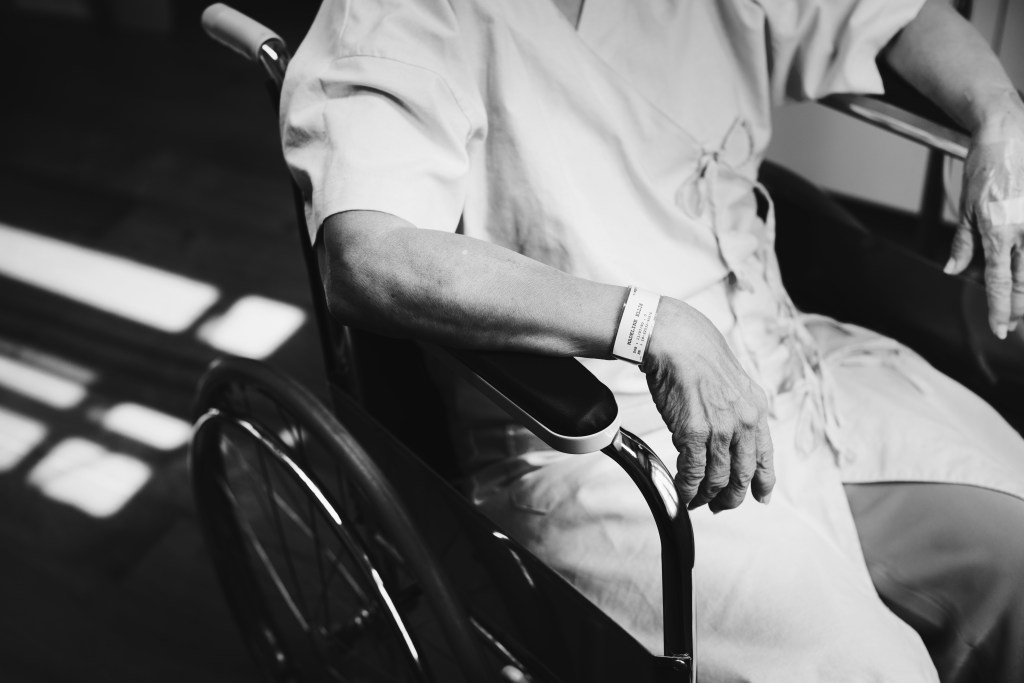
There is a strange moment when you move abroad with MS and realize that your medical history did not truly move with you unless you carried it yourself. Your body arrived in Shanghai. Your medication arrived. Your documents arrived. Your family arrived. Your work at SSPU started becoming part of daily life. But the invisible archive behind the disease, the years of appointments, scans, treatment decisions, symptoms, routines, neurologist conversations, and clinical details, does not automatically appear in a new country just because your plane landed. Back in Bratislava, I was inside a system that knew the rough shape of my case. Not perfectly, because no healthcare system is perfect, but enough to create continuity. There were doctors, records, procedures, language, expectations, and a medical rhythm where my MS existed as part of an ongoing story. In Shanghai, that background is not automatic. A new doctor does not know what has been stable, what changed years ago, what matters now, what is old noise, and what deserves attention. That is not an insult. That is reality.
This is the first brutal truth of becoming a foreign patient…you stop being known by the system. You may be the same man, with the same diagnosis, the same history, and the same body, but the new environment starts from zero. It does not carry the memory of your previous appointments. It does not understand your baseline unless you explain it. It does not know what treatment decisions were made before. It does not know what you have already survived. That changes how you walk into the medical world. You cannot behave like a passive passenger inside your own case. You cannot assume somebody else will always have the right information at the right time. That is weak planning, and weak planning is not my style. If I need help abroad, I need to bring clarity into the room, not confusion wrapped in confidence. This is not fear-based thinking. Other people may fear being in a foreign system. I do not work from fear. My motto remains what it is…the only thing that scares me is that I am not afraid of anything. That means I need command, not panic. If fear is not there to slow me down, structure has to do the job.
The point is simple…nobody here knows my medical history automatically. Fine. Then I become the man who can introduce it clearly. That is not weakness. That is control.
Familiar Healthcare Was a Hidden Safety Net.
Familiar healthcare has a hidden comfort people do not appreciate until it is gone. It is not only about doctors, prescriptions, tests, and appointments. It is about knowing how the whole machine behaves. You know where to go, what papers matter, how pharmacies work, what kind of waiting is normal, which questions are useful, and what counts as a real problem. Even when the system is annoying, it is known. Leaving Bratislava removed that quiet safety net. In the old system, I did not have to think about every medical step from zero. The background existed, i.e., neurologist, medication, insurance procedures, pharmacy rhythm, MRI history, language, previous decisions. In Shanghai, I have to build a new map. Where would I go if something changed? What documents should be ready? Which information must be summarized? What do I need translated? What is the fastest way to explain my treatment if the situation demands it?
That is not drama. That is a real layer of relocation. A healthy person can sometimes move abroad and treat medical details as something to figure out later. Maybe that works for them. With MS, later can become a bad strategy. Calm is useful only when the foundation is handled. Careless calm looks cool until the first real problem appears. There is also an emotional irritation in this. Some days, you do not want to be the organized patient. You do not want to summarize your diagnosis like a professional briefing. You want to work, train, write, be with your family, and move through the city without MS tapping you on the shoulder like an administrative officer. But wanting life to be simpler does not make it simpler. The disappearance of familiar healthcare forces an upgrade. It pushes you to clean up your documents, think about continuity, understand what matters, and stop relying on a system that is no longer wrapped around your daily life. It does not mean distrust. It means readiness. I respect medical expertise, but I also know expertise works better when the patient brings accurate information instead of vague memory.
That is the lesson…familiarity was useful, but I cannot depend on it here. The old safety net is gone. So the new one has to be built deliberately.
I Had to Learn My Own Case Like a Professional.
Living with MS abroad forces one hard realization: nobody has been present for the full story except you. Doctors guide you. Medical systems support you. Family stands with you. But you are the only one who lives inside the whole pattern…symptoms, treatment, stress, sleep, work, training, fatherhood, travel, heat, fatigue, and daily function. You are the only witness who never leaves the room. That means I have to know my own case properly. Not obsessively, not like someone worshipping symptoms, but like a serious adult. Diagnosis, treatment, relevant scans, major symptoms, medication routine, side effects, what has been stable, what changed, what my neurologist considered important, and what counts as a real warning sign. Not every tiny number. Not every medical phrase. But the skeleton of the case has to be clear. This is where my scientific side and fighter side agree completely…collect data, read the pattern, and do not get emotional about facts. A symptom is not automatically a catastrophe. A tired day is not automatically decline. A strange sensation is not automatically the opening scene of a horror movie. But repeated signals deserve attention. The middle line is structured awareness: observe without panic, track without obsession, respond without drama.
Shanghai makes this harder because many variables changed at once. Different climate, different walking load, different food, different sleep rhythm, different workload, different family logistics, different culture. If something feels off, the answer is not always obvious. Is it MS? Is it heat? Is it poor sleep? Is it too much city input? Is it stress? Is it training load? Is it simply the body adapting? You cannot answer intelligently without knowing your baseline. That is why scattered medical information is unacceptable. A screenshot here, a paper there, a scan date half-remembered, a prescription buried in a message. That is amateur territory. Medical information does not need to become your personality, but it must be accessible when needed. The reward is not applause. The reward is not being caught unprepared. Real ownership means knowing the facts, the timeline, the baseline, what changed, and what to ask. It means walking into a medical conversation with precision instead of fog. That is quiet power, but real power. Not the kind that shouts. The kind that prevents unnecessary weakness. The kind that lets you enter a new medical environment and say: here is my history, here is my treatment, here is what changed, here is what I need to know. Now let’s work.
Responsibility Is What Keeps Life Big.
Living with MS abroad cuts away childish thinking fast. Medication, symptoms, documents, appointments, emergency access, treatment routines, and medical communication cannot float around in the background like optional admin. They must be handled before they become urgent. That does not make life smaller. It keeps life bigger. This is where the fake alpha-male fantasy gets exposed. A lot of men want to look hard, talk hard, train hard, and act like nothing touches them. Fine. But if a man cannot manage his medication, organize his documents, track relevant symptoms, protect sleep, communicate with doctors, and make responsible decisions for his family, then his hardness is theatre. Real strength has administration behind it. Real strength knows where the medical papers are. Responsibility is freedom in its least glamorous form. It may look like calendars, reminders, documents, routines, checklists, and boring medical discipline, but those things create space. They reduce uncertainty. They prevent unnecessary mistakes. They make it possible to focus on work, family, training, writing, and building the new life instead of constantly reacting to problems that could have been prevented.
In Shanghai, this responsibility touches everything. It shapes how I plan the day because heat, walking, work, and family logistics all affect energy. It shapes how I manage treatment because the routine has to survive a new environment. It shapes how I lead at home because my wife and daughter need stability, not a man who becomes dramatic whenever life gets difficult. It shapes how I work at SSPU because professional output requires a private system that does not leak everywhere. This is not about living scared. I do not do scared. Other people may build choices around fear, but my language is ownership. I do not need fear to make me careful. I need standards. I need to remember that refusing limits does not give me permission to be careless. That is the balance: live bigger, manage harder. MS abroad does not demand that I become smaller. It demands that I become more responsible. Those are not the same thing. Smaller means living below capacity because uncertainty exists. More responsible means building systems strong enough to carry ambition into uncertain conditions. I choose the second one.
I Am Not Lost in The System.
A foreign medical environment can make a person feel exposed. The old routes, old language, old procedures, old doctors, old pharmacy rhythm, and old assumptions are no longer wrapped around the day. You stand in a new city with the same disease and realize that continuity is no longer automatic. It has to be built with intention. That could make some people afraid. I understand why. They imagine explaining themselves poorly, not being understood, not having the right papers, not knowing where to go, or not knowing what to do if symptoms change. Those are real concerns for people with chronic illness abroad. But I refuse to let those concerns write the chapter for me. I am not lost in the system because I do not arrive empty-handed. I know the important parts of my case. I know what needs to be communicated. I know which questions matter. I know when vague confidence is useless and when precision becomes the only respectable option. A new medical environment becomes less intimidating when you stop waiting for it to recognize you and start showing up prepared. That is the point of being a foreign patient with MS. You cannot expect a new country to automatically understand your history, your baseline, your treatment, your limits, or your standards. You bring the relevant facts with you. Not as a victim asking to be handled gently, but as a man who knows what he carries and refuses to make confusion part of the disease.
The diagnosis came to Shanghai with me. Fine. So did the part of me that refuses to be reduced by it. MS may influence the terrain, but it does not get the whole map. Treatment matters, but it is not my identity. Medical history matters, but it does not replace ambition, work, fatherhood, marriage, training, or writing. I have a condition that requires management. That is all. The rest still has to be lived.
Being a patient does not mean being passive. It means there is a medical reality attached to the life I am building. I respect that reality because I am not stupid. I manage it because I want my world to stay wide. I carry the information, ask the questions, keep the treatment serious, and then I go back to the real work: building the life I came here to build. Shanghai has made one thing clear. The house did not come with me. The car did not come with me. The familiar healthcare rhythm did not fully come with me. But the standard came. That is enough. A man does not need every system around him to be familiar before he can move. He needs to know what matters, speak clearly when it counts, and keep walking. The foreign patient is not weak by default. Sometimes he is sharper than the comfortable patient because distance forces ownership. Unfamiliarity forces precision. New systems force you to stop drifting and start paying attention. That is not a burden I resent. That is a blade I can use.
I am not lost in the system.
I brought the map.


Leave a Reply